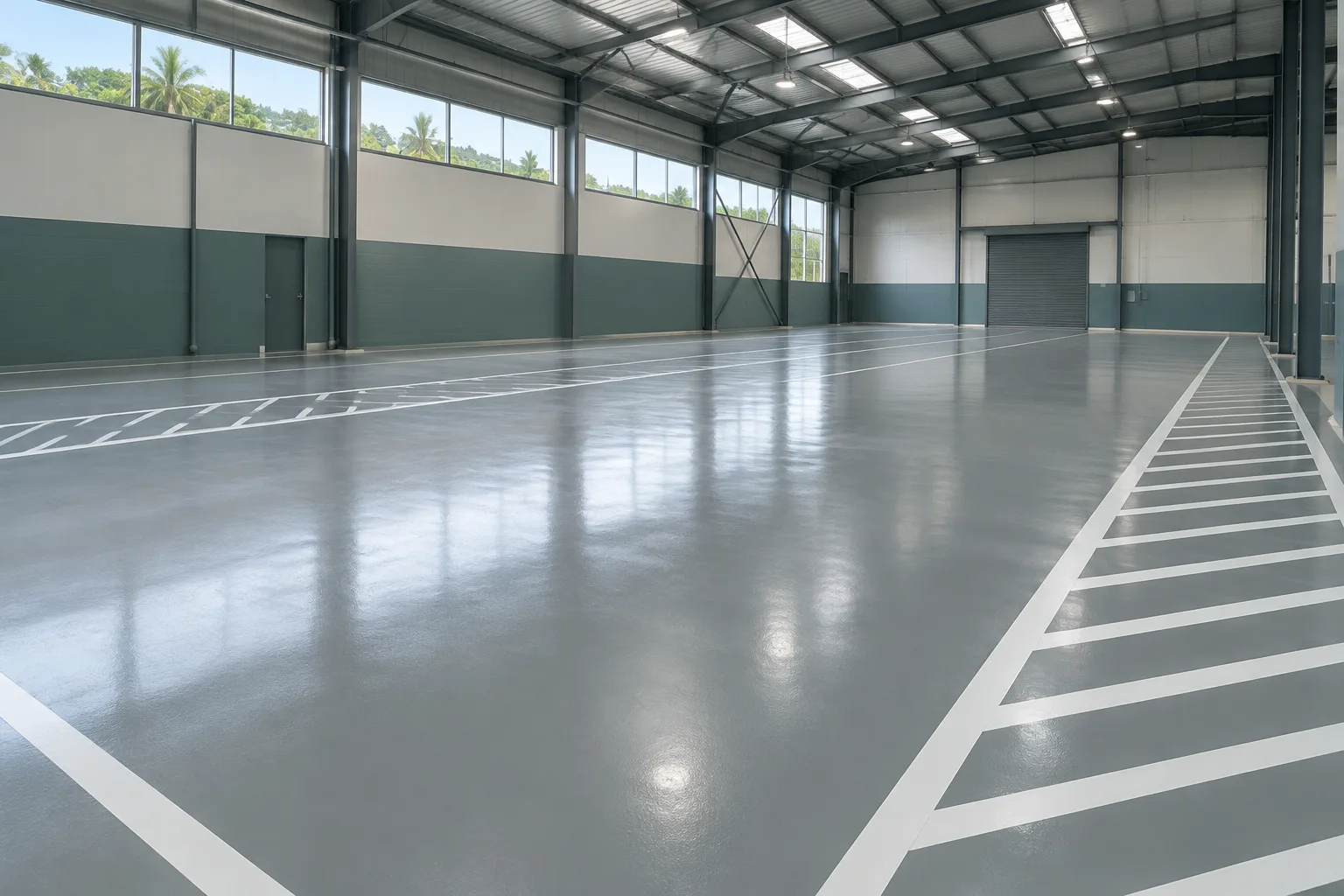
Epoxy Flooring in Pinetown
Sixteen kilometres inland from the city, Pinetown's industrial parks run on their floors. Forklift aisles, wash-down bays and workshop slabs that have taken years of oil all need something tougher than paint, and the work has to fit around production.
Get a Free QuoteWestmead, New Germany and the rest of the belt
Pinetown is one of four main industrial hubs in the Durban-Pinetown region. On the western side are Westmead, Mahogany Ridge, Alexander Park and Surprise Farm; to the north, New Germany has Falcon Industrial Park, Mountain Ridge, New Germany Industrial Park and Pineside. The businesses based here range from textiles and protective clothing to snack foods, wholesale and chemicals.
That mix means one street can need three different floors: a dry warehouse that only wants dust sealed and aisles marked, a food line that is hosed down every shift, and a chemical store where a spill must not eat into the concrete. Our industrial and commercial coatings page goes through each type.
A rough Pinetown price list for industrial floors
People searching for Pinetown floors often ask for a price list. Here are installed, per-square-metre figures from South African guides published in 2026. Treat them as a starting point, not our quote.
| System | Per m², installed | Where the figure comes from |
|---|---|---|
| Chemical-resistant epoxy, 3 mm and up | R350 to R1 000 | One SA installer's published guide |
| Industrial 100% solids epoxy system | R800 to R2 000 | One SA flooring cost guide |
| Polyurethane screed, 3 to 4 mm | R350 to R600 | Same installer's guide |
| Heavy-duty polyurethane concrete | R1 200 to R2 500 | A Durban cost guide |
| Add-on: moisture-tolerant primer | +R120 to R250 | Same Durban guide |
Wide ranges are normal here. Film thickness, the chemicals involved, how much repair the slab needs and whether we can work in one go or must phase around shifts all move the number. Home garages and decorative finishes are on our full epoxy price guide.
How long the floor is out of action
On a warm day of around 30 °C, the technical sheet for one common epoxy body coat lists a minimum of 16 hours before the next coat, about 18 hours before people can walk on it, around two days for light traffic and five days to full cure. At 20 °C each of those stretches out.
We split big floors into bays so one area cures while the next is prepared, and we give you the date for each bay in the quote.
Testing an old workshop slab
Primer data sheets ask for concrete that is clean, dry, free of oil and grease, and strong enough at the surface; one sets a minimum pull-off strength of 1.5 N/mm². In an old workshop, years of drips are the first thing to check.
We grind a test patch, look at how the stains respond and check moisture before we price anything.
Also on our map
If you have a house as well as a plant, our pages on epoxy for Durban North garages and patios and floors in uMhlanga cover the residential side.
Pinetown factory and workshop questions
Get a figure for your floor
Send the square metres, what the floor carries and what gets spilled on it. We will arrange a visit, test the slab and come back with a written quote.
Start a quote request