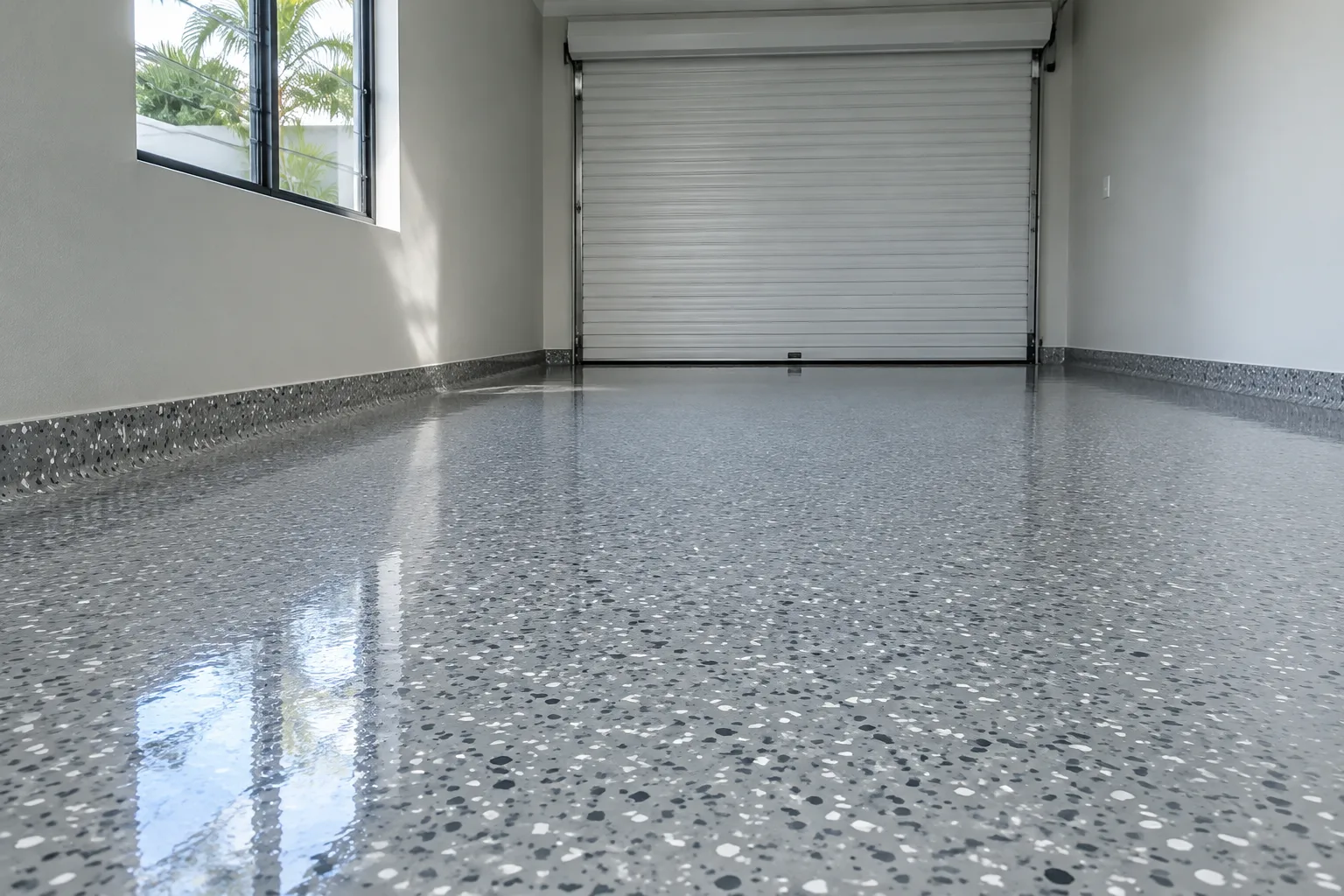
Garage floors
Suits: Home garages, carports and workshops where cars, bikes and boxes live.
Watch for: Moisture rising through ground-level slabs, and how many days the car must stay out.
Garage epoxy detailsSix kinds of floor, from a single garage to a food factory. They share one limit worth knowing about in Durban: every data sheet we opened for this page stops at 80% relative humidity on application day, and Durban's long-term average is exactly that from January to March.
Choosing the right system is half the job. Pick the closest match below, or ask us to recommend one after a site visit.
Get a Free QuoteSuits: Home garages, carports and workshops where cars, bikes and boxes live.
Watch for: Moisture rising through ground-level slabs, and how many days the car must stay out.
Garage epoxy details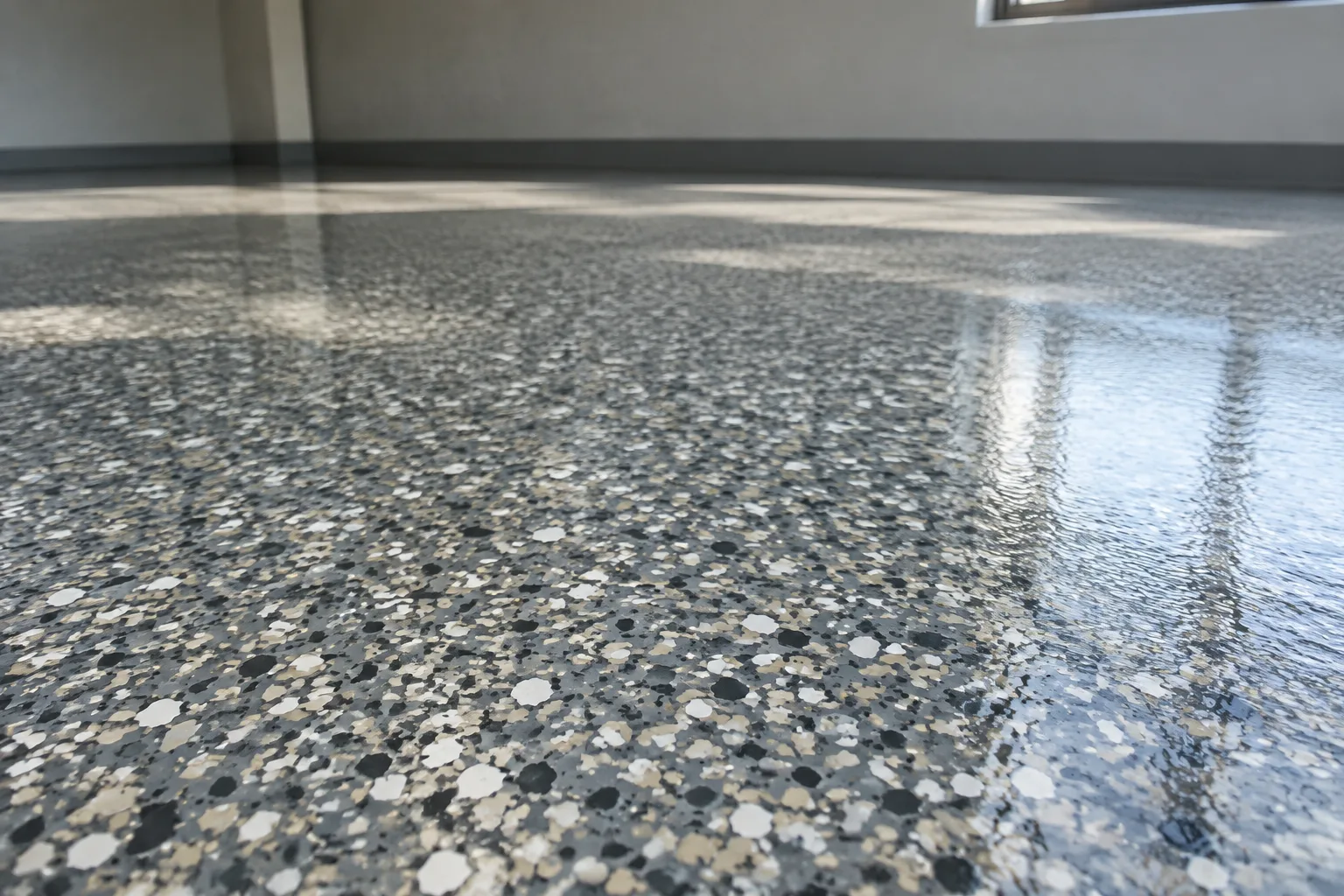
Suits: Garages, laundries, gyms and storerooms that need to hide dust and scuffs.
Watch for: A plain flake floor scores low for grip, so wet spots get a quartz texture.
More on flake finishes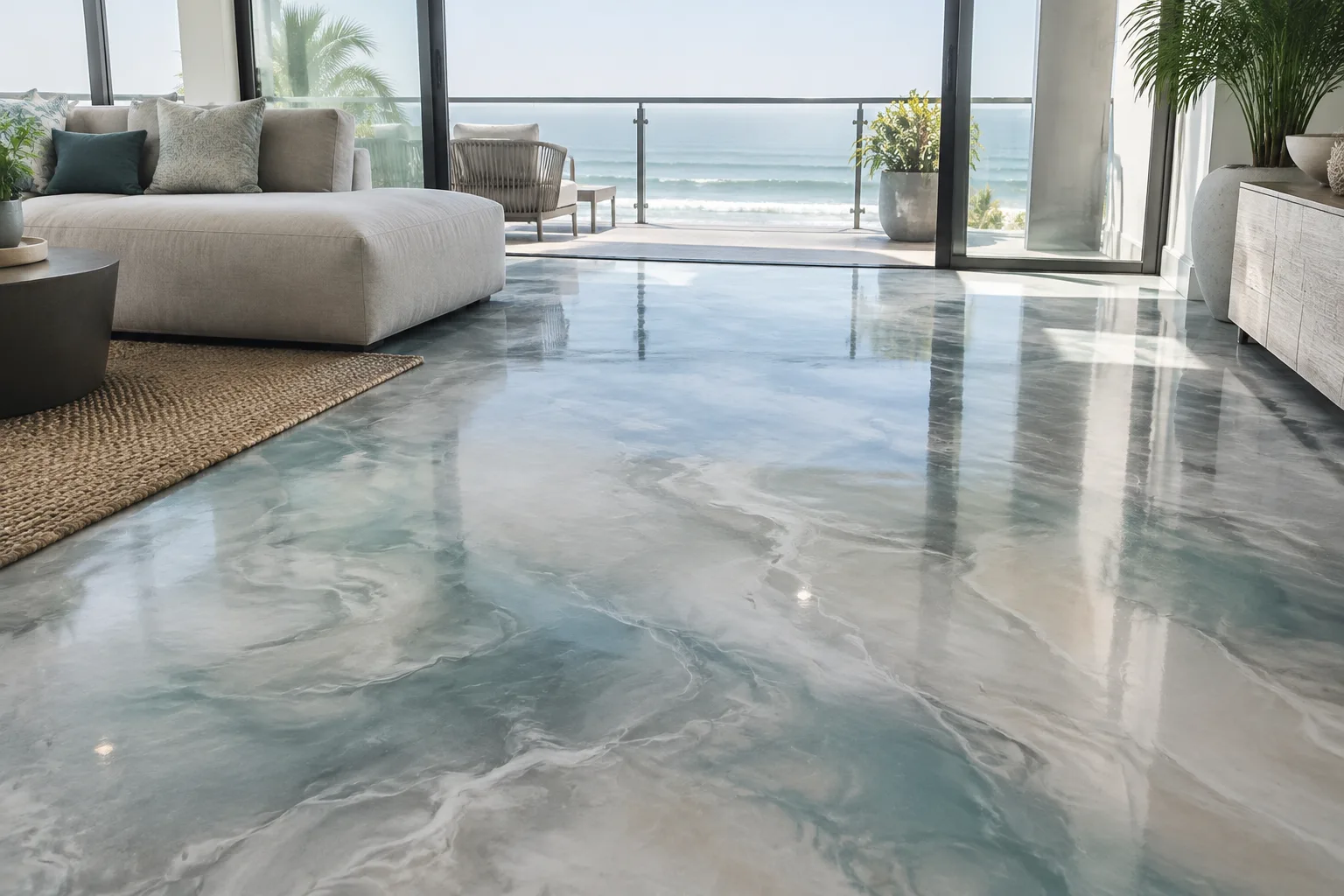
Suits: Lounges, home offices, salons and showrooms where the floor is the feature.
Watch for: Strong sun through glass, which is why a UV-resistant topcoat goes over the swirls.
How metallic floors are built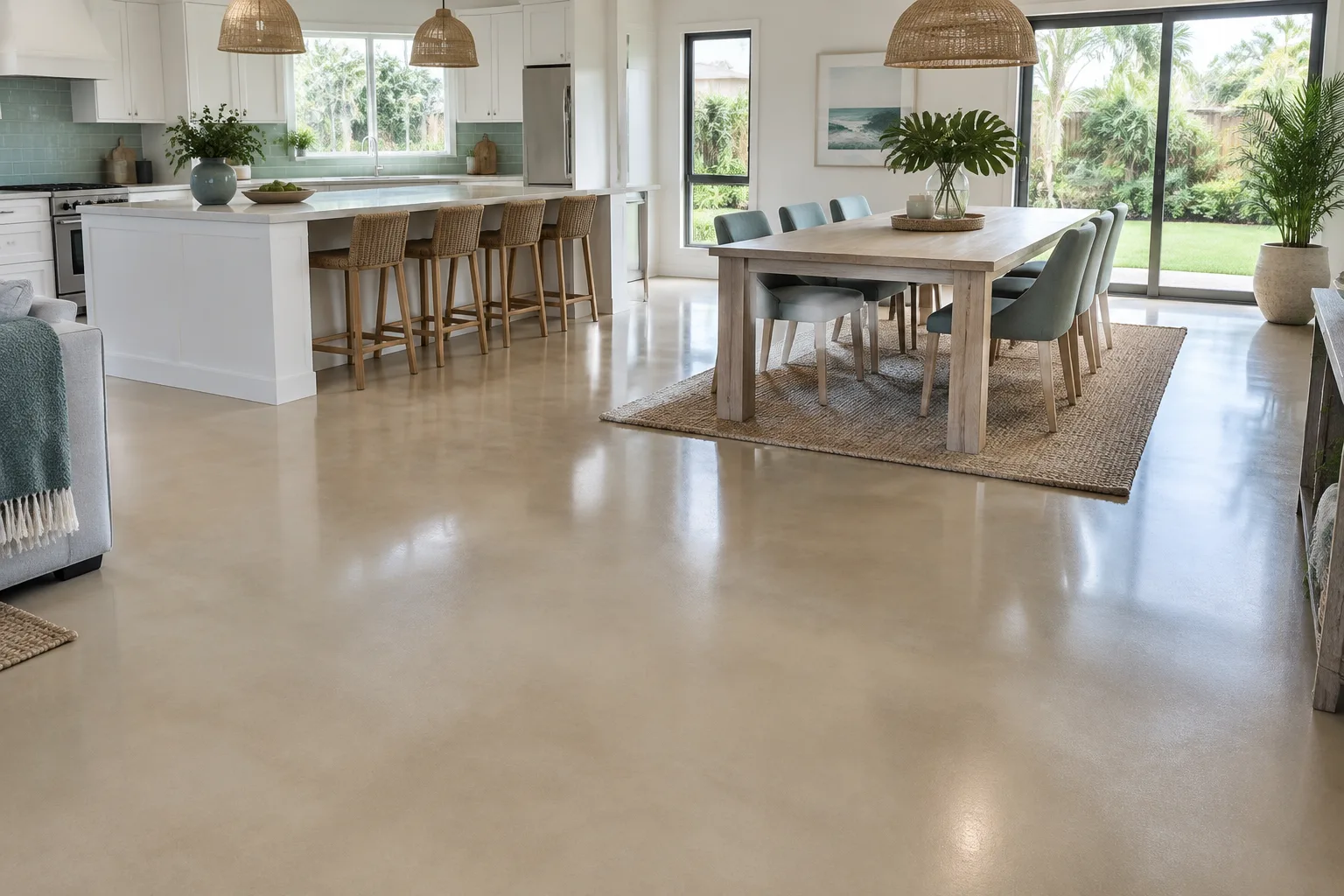
Suits: Kitchens, open-plan living, covered patios and flatlets in houses and apartments.
Watch for: Trustee consent for balconies and patios in sectional title schemes.
Home flooring and body corporate rules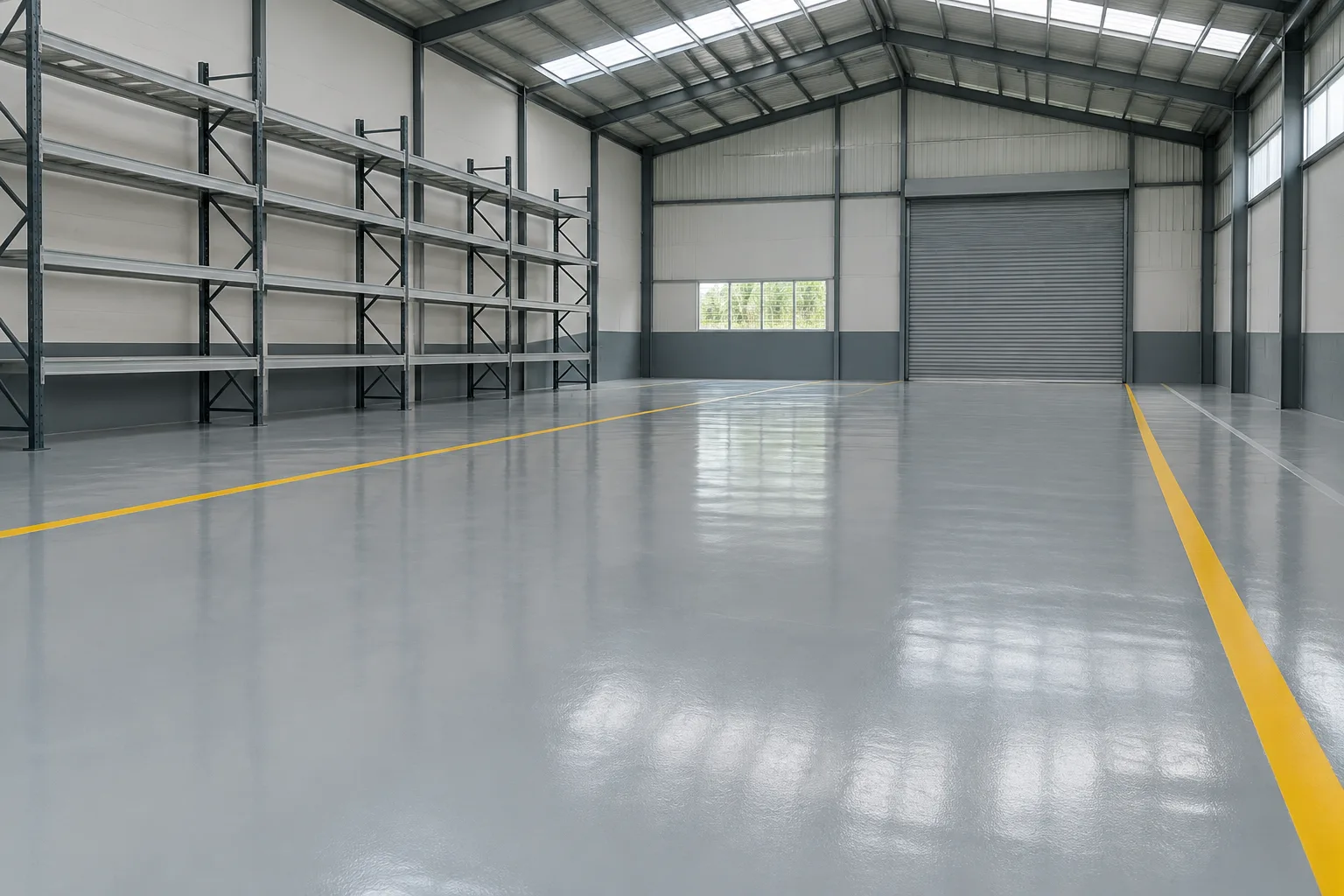
Suits: Warehouses, factories, workshops, showrooms and retail back-of-house.
Watch for: Forklift traffic, heat on the floor and the legal duty to keep floors skid-free.
Factory and warehouse floors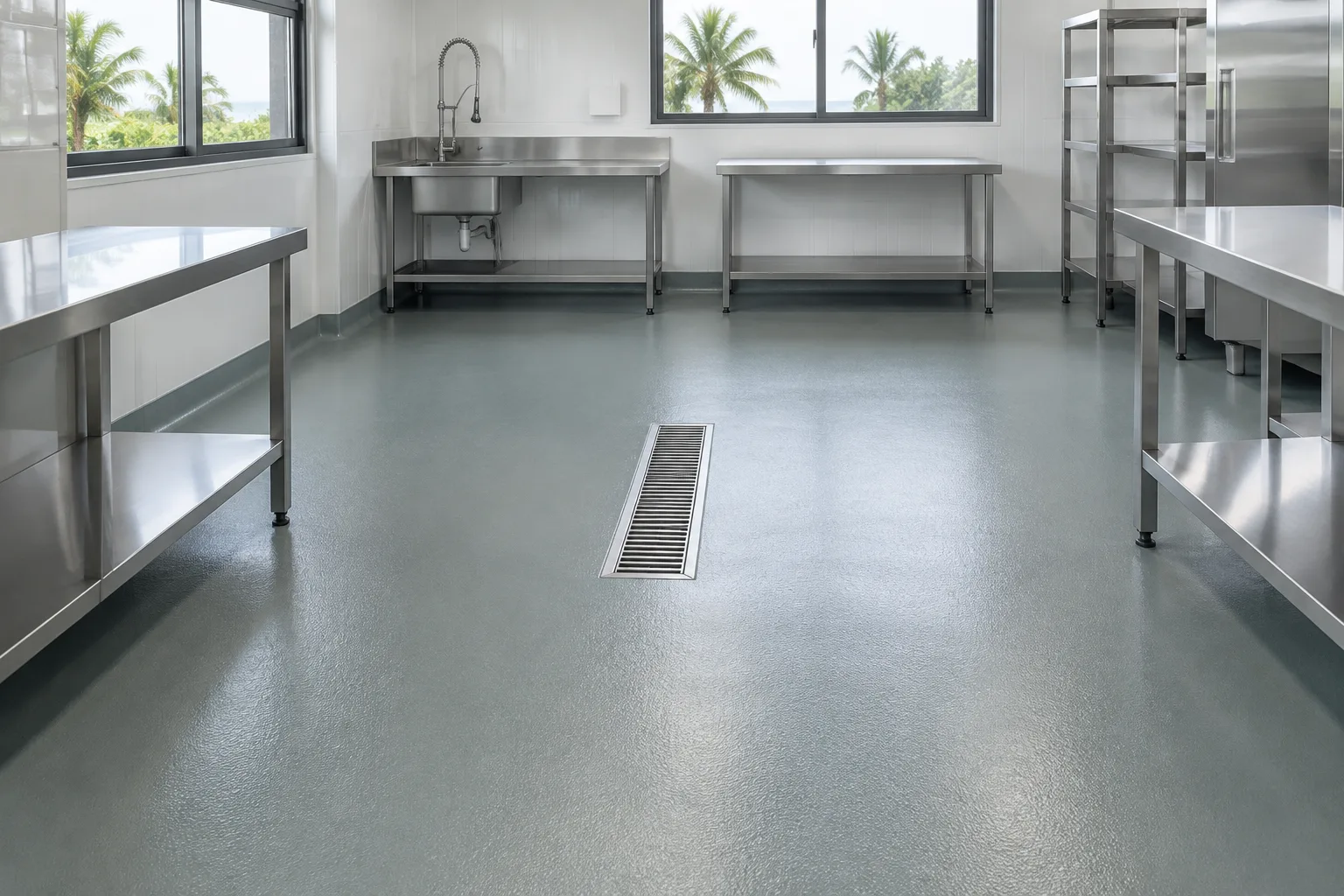
Suits: Commercial kitchens, food production, cold rooms and anywhere hosed down hot.
Watch for: Shutdown time: food must stay out for at least 48 hours after laying.
When polyurethane beats epoxyFigures from South African manufacturer data sheets for representative products, at a slab temperature of about 20 °C. Hotter days shorten the wait; muggy, still days stretch it.
| System | Typical build | Walk on it after | Rated for |
|---|---|---|---|
| Water-based garage epoxy | Thin roller coats | ~20 h | Indoors and outdoors |
| Self-smoothing floor epoxy | Roller coat or sand-filled layer | ~24 h | Indoors only |
| Full-flake epoxy system | 2–3 mm | ~16 h | Indoors only |
| UV-resistant PU topcoat | Two thin coats | ~12 h | Indoors and outdoors |
| Polyurethane cement screed | 6–9 mm | See data sheet | Indoor process areas |
Start with where the floor is. Several of the decorative and self-smoothing epoxies on the market are rated for interior use only, including the flake system in the table. An open patio, a carport or a pool edge needs a product its maker rates for outdoor exposure, usually with sand in the top coat.
Next, ask whether heat reaches the floor. A standard epoxy handles around 50 °C of steady dry heat and only occasional steam. Fryers, pot-wash areas, ovens and freezer doors move you to polyurethane cement, which is laid many times thicker.
Then think about water underfoot. A full-flake floor rates R9 on the ramp test, the lowest slip class, so a laundry, a garage entrance or a wet production line gets quartz added to the final coat.
Finally, consider the concrete. A standard epoxy needs it at about 4% moisture or below. Polyurethane cement tolerates damper slabs, as long as there is no standing water and nothing rising from the ground. We test before recommending, so this last question is ours to answer.
Every system starts with a moisture test and diamond grinding, and every one goes down only when the slab is at least 3 °C warmer than the dew point. That is why a booked date can slip by a morning in January. The full sequence, from the first visit to handing back the room, is laid out on our step-by-step page.
Costs depend on the system, the size and the state of the slab. The Durban price guide sets out typical ranges; your own figure comes after we have seen the floor.
Describe the space and how it is used, and we will suggest a system at the site visit. Asking costs nothing.
Get a Free QuoteFinish examples
Solid colours, flake blends, metallic swirls and plain hard-wearing factory coats, side by side. Tap one to open it larger.
These are illustrations made to show each finish. They are not photographs of completed jobs.
See every finish on one page