Epoxy floors for Durban homes and apartments
A seamless resin floor suits the way people live on this coast: sandy feet, wet swimming towels, doors open to the garden for most of the year. Grout lines never get the chance to blacken, and damp has no joint to creep under.
A home is not a warehouse, though. People live there during the work, and in a block of flats the neighbours and trustees have a say. This page covers both.
Get a Free Quote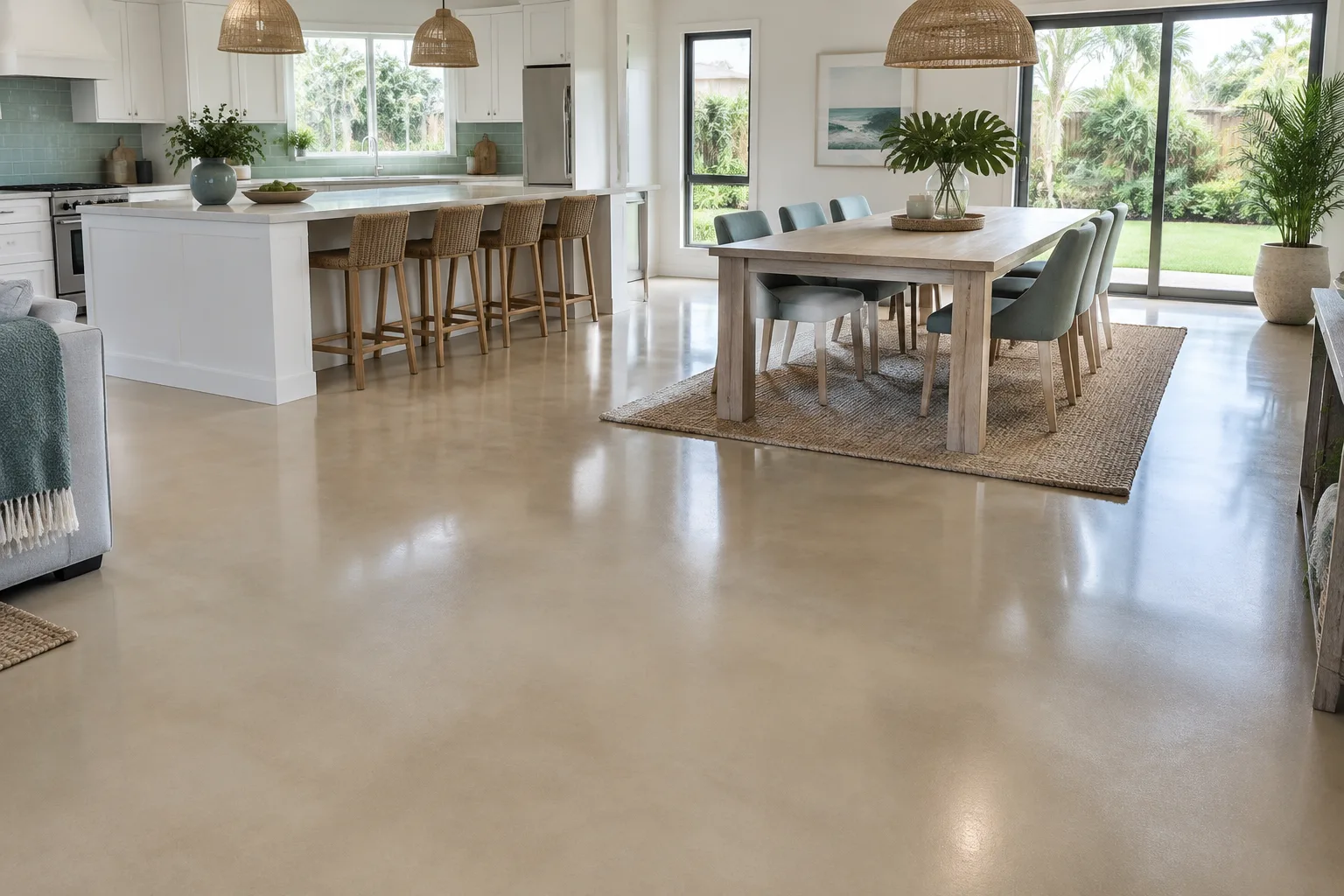
Living in a sectional title scheme
Apartments along the coast, from Umhlanga's high-rises to the walk-ups in town, are usually sectional title schemes governed by the Sectional Titles Schemes Management Act. Three of its prescribed rules touch a flooring job:
- Changing the external appearance of your unit or an exclusive use area, such as a balcony or patio, needs the trustees' written consent unless the change is minor and does not spoil the look of the building.
- The body corporate must stop alterations that could affect the building's stability or interfere with other owners. A thin coating on an existing screed is not structural, but a contractor chasing out screed or cutting into a slab should be cleared first.
- Storing flammable substances in a unit needs trustee consent unless they are for household use. Some primers and topcoats are solvent-based, so we bring them in for the day rather than leave stock in your flat or storeroom.
Your scheme may also have its own rules on contractor hours, lifts and parking for work vehicles. Send us those with your quote request and we will plan around them.
Coatings that suit a lived-in house
Water-based epoxies are made for exactly this: low VOC emissions, a semi-gloss finish, and a rating for both indoor and outdoor use on the product we checked. They are the default for occupied homes. Where a room needs a tougher or UV-stable surface, a solvent-based polyurethane topcoat may go over the top, and that day the house needs good airflow.
Indoors, a satin or semi-gloss finish hides fine scratches better than high gloss, and a sheet of felt under every chair leg does more for the floor than any polish. Plain epoxy may shift colour where strong sun falls on it, which is why the topcoat question comes up in every sunny room we quote.
Humidity is the other half. Freshly laid epoxy needs a full day, 24 hours at minimum, shielded from condensation, damp and splashes, and the air should stay under 80% relative humidity while it goes down. Durban averages 80% from January to March, so in summer we keep windows shut and the aircon running in the room being done. Our article on coating floors in Durban's humidity goes into the detail.
Room by room
Kitchens and sculleries
A solid satin colour, coved at the kickplates if you want it fully wipe-clean. Fridges and stoves come out and go back once the floor has cured.
Lounges and open-plan living
Solid colours or a metallic finish. Rooms with big sliding doors get a UV-resistant topcoat so the colour holds near the glass.
Covered patios and braai areas
An outdoor-rated epoxy with fine quartz for grip, since wet feet come straight off the pool. Many decorative epoxies are interior-only, so the product choice matters here.
Garages and flatlets
The most common starting point. See our garage coating page for slab testing and how long the car stays out.
Older houses with suspended or damp floors
Epoxy needs a concrete or cement screed base, so timber floors on joists are out. If you own an older house in Durban North or elsewhere, lift a corner of carpet or check under the house before asking for epoxy. Ground-floor rooms built straight onto the soil may draw moisture, so we test the slab first; above about 4% moisture, a barrier layer goes down before the colour.
For a guide to what each finish costs per square metre, head to our prices.
Homeowners ask us
Tell us about your home
Which rooms, roughly how big, and whether it is a house or a sectional title unit. It costs nothing to ask for a quote.
Request a home flooring quote